GTU Young Scientists Participate in International Conference in the Netherlands
14-11-2025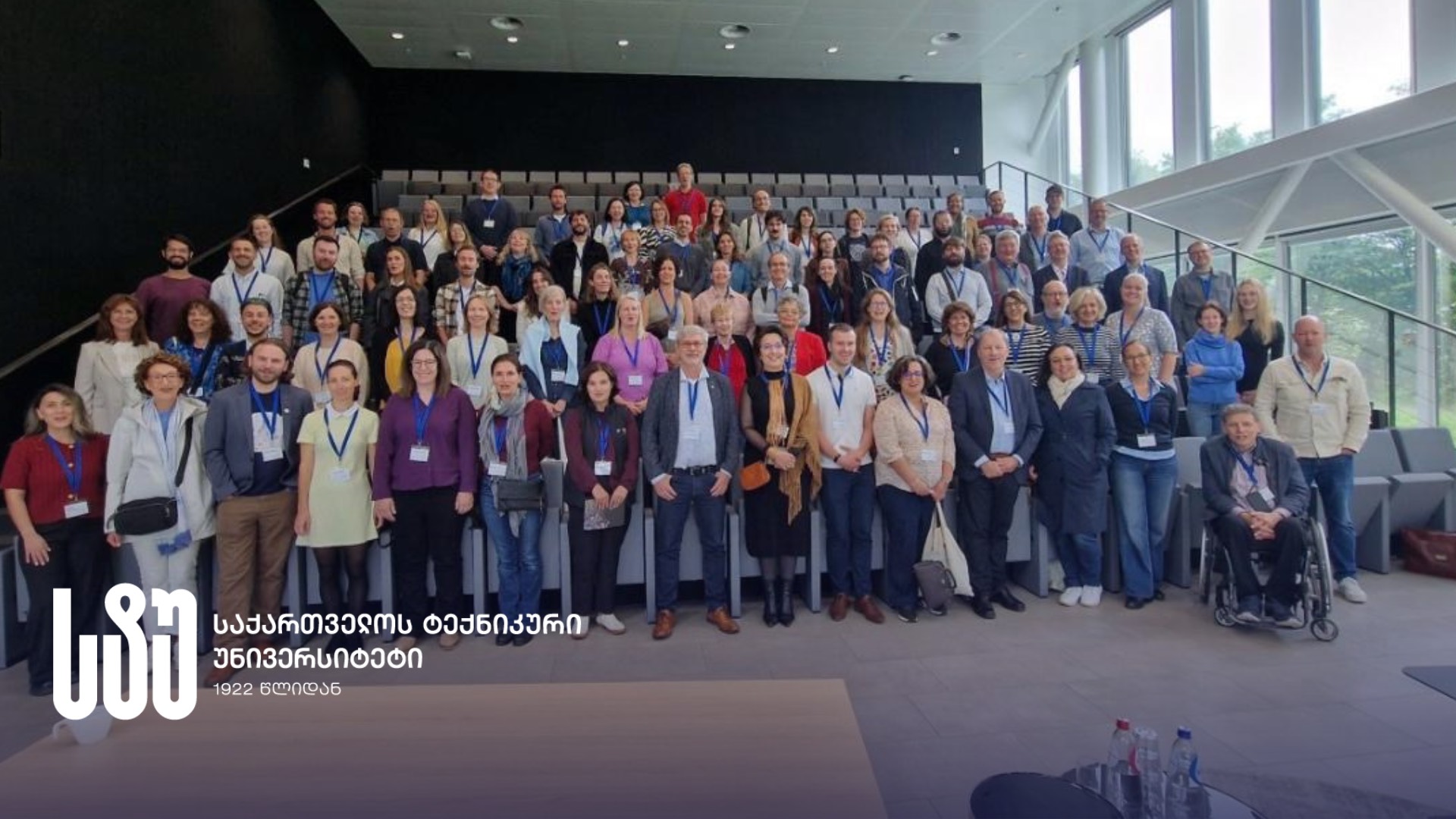
Young scientists Tamuna Modebadze and Giorgi Andiashvili from the Faculty of Agricultural Sciences and Chemical Technologies of the Georgian Technical University participated in the international conference - The 43rd Annual Meeting of the European Culture Collections’ Organization (ECCO XLIII).
The annual meeting of ECCO is a platform where leading European research centers and scientists gather to share experience and new research on the development of microorganism collections, biodiversity, biotechnology, and innovative scientific approaches.
According to Tamuna Modebadze, a young scientist from the GTU Faculty of Agricultural Sciences and Chemical Technologies, the international conference - ECCO XLIII was held in the city of Utrecht (Netherlands) and was attended by young researchers and scientists from leading European universities.
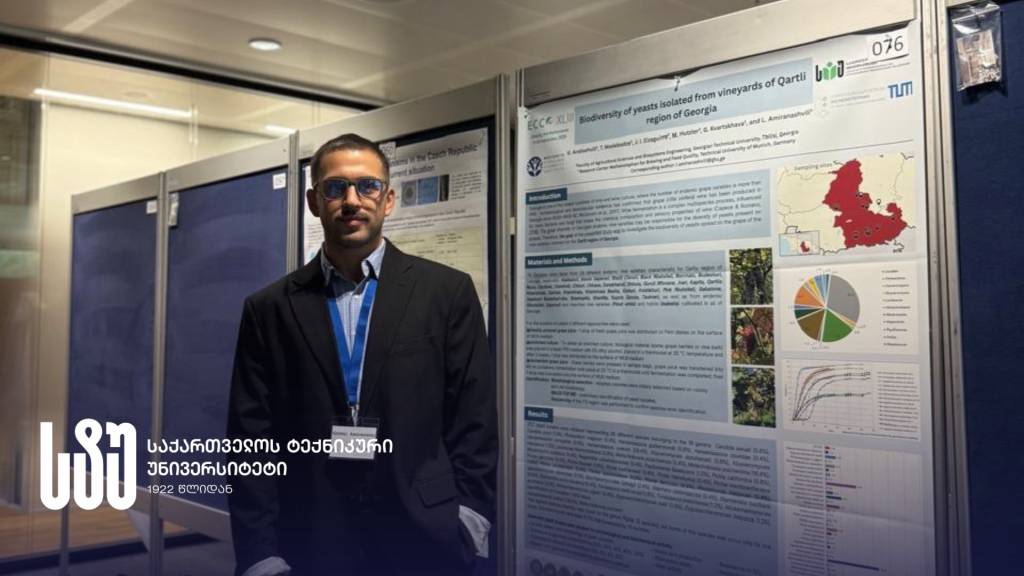
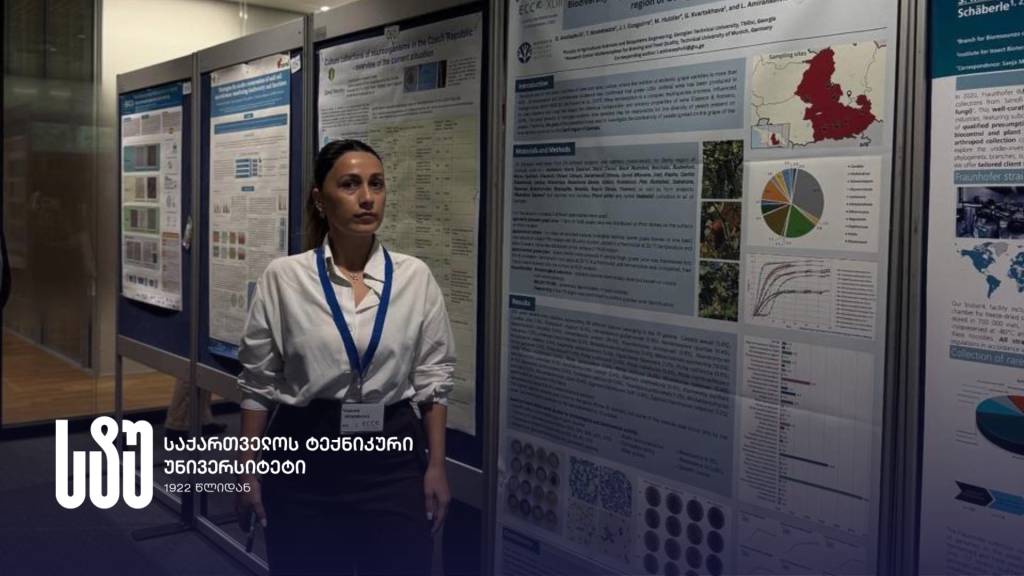
“We participated in the international conference within the framework of the project “Biodiversity of local fermentation yeasts of traditional Georgian winemaking: Creation of collections and study of their metabolic potential for the formation of regional wines with specific characteristics” funded by the Shota Rustaveli National Science Foundation of Georgia and presented a poster on the topic “Biodiversity of yeasts isolated from vineyards of Qartli region of Georgia”. The participation of young scientists from the Georgian Technical University in such a large-scale international conference is particularly important, both for wine scientists and for the preservation and popularization of Georgian vine and wine culture,” says Tamuna Modebadze.
The research presented by young Georgian scientists at the international conference includes a detailed study of the biodiversity of yeasts on grapes of endemic grape varieties distributed in Kartli. As young scientist Giorgi Andriashvili states, the goal of the research is to identify and analyze the microbial ecosystems that determine the wine fermentation process, its aromatic and taste properties, as well as the final quality of the product.
“Our research is of particular importance given that Georgia is recognized as one of the oldest wine homelands, where the diversity of local grape varieties creates a unique microenvironment formed over centuries. It is this microbial uniqueness that determines the individual organoleptic profile of Georgian wine and increases its competitiveness in the world market. The research is not limited to the identification of yeasts; it is an important step towards understanding and developing traditional winemaking at a modern scientific level, as the results obtained contribute to the protection of the genetic and microbiological resources of Georgian endemic vines, better use of their potential, and the introduction of new biotechnological approaches. This project, both from a scientific and cultural point of view, significantly contributes to the international popularization of Georgian vine and wine culture, strengthens Georgia’s research position in the region, and creates new opportunities for young scientists in the global scientific community. In addition, we participated in theYeasts.org Workshop (Westerdijk Institute, Utrecht), which dealt with yeast identification methods and collection management practices. This workshop significantly deepened our knowledge in yeast research and gained practical experience,” Andiashvili states.
The annual meeting of ECCO is a platform where leading European research centers and scientists gather to share experience and new research on the development of microorganism collections, biodiversity, biotechnology, and innovative scientific approaches.
According to Tamuna Modebadze, a young scientist from the GTU Faculty of Agricultural Sciences and Chemical Technologies, the international conference - ECCO XLIII was held in the city of Utrecht (Netherlands) and was attended by young researchers and scientists from leading European universities.
“We participated in the international conference within the framework of the project “Biodiversity of local fermentation yeasts of traditional Georgian winemaking: Creation of collections and study of their metabolic potential for the formation of regional wines with specific characteristics” funded by the Shota Rustaveli National Science Foundation of Georgia and presented a poster on the topic “Biodiversity of yeasts isolated from vineyards of Qartli region of Georgia”. The participation of young scientists from the Georgian Technical University in such a large-scale international conference is particularly important, both for wine scientists and for the preservation and popularization of Georgian vine and wine culture,” says Tamuna Modebadze.
The research presented by young Georgian scientists at the international conference includes a detailed study of the biodiversity of yeasts on grapes of endemic grape varieties distributed in Kartli. As young scientist Giorgi Andriashvili states, the goal of the research is to identify and analyze the microbial ecosystems that determine the wine fermentation process, its aromatic and taste properties, as well as the final quality of the product.
“Our research is of particular importance given that Georgia is recognized as one of the oldest wine homelands, where the diversity of local grape varieties creates a unique microenvironment formed over centuries. It is this microbial uniqueness that determines the individual organoleptic profile of Georgian wine and increases its competitiveness in the world market. The research is not limited to the identification of yeasts; it is an important step towards understanding and developing traditional winemaking at a modern scientific level, as the results obtained contribute to the protection of the genetic and microbiological resources of Georgian endemic vines, better use of their potential, and the introduction of new biotechnological approaches. This project, both from a scientific and cultural point of view, significantly contributes to the international popularization of Georgian vine and wine culture, strengthens Georgia’s research position in the region, and creates new opportunities for young scientists in the global scientific community. In addition, we participated in theYeasts.org Workshop (Westerdijk Institute, Utrecht), which dealt with yeast identification methods and collection management practices. This workshop significantly deepened our knowledge in yeast research and gained practical experience,” Andiashvili states.