A Series of Conferences Dedicated to the Day of the Abkhazian Language Opened at the Georgian Technical University
27-10-2025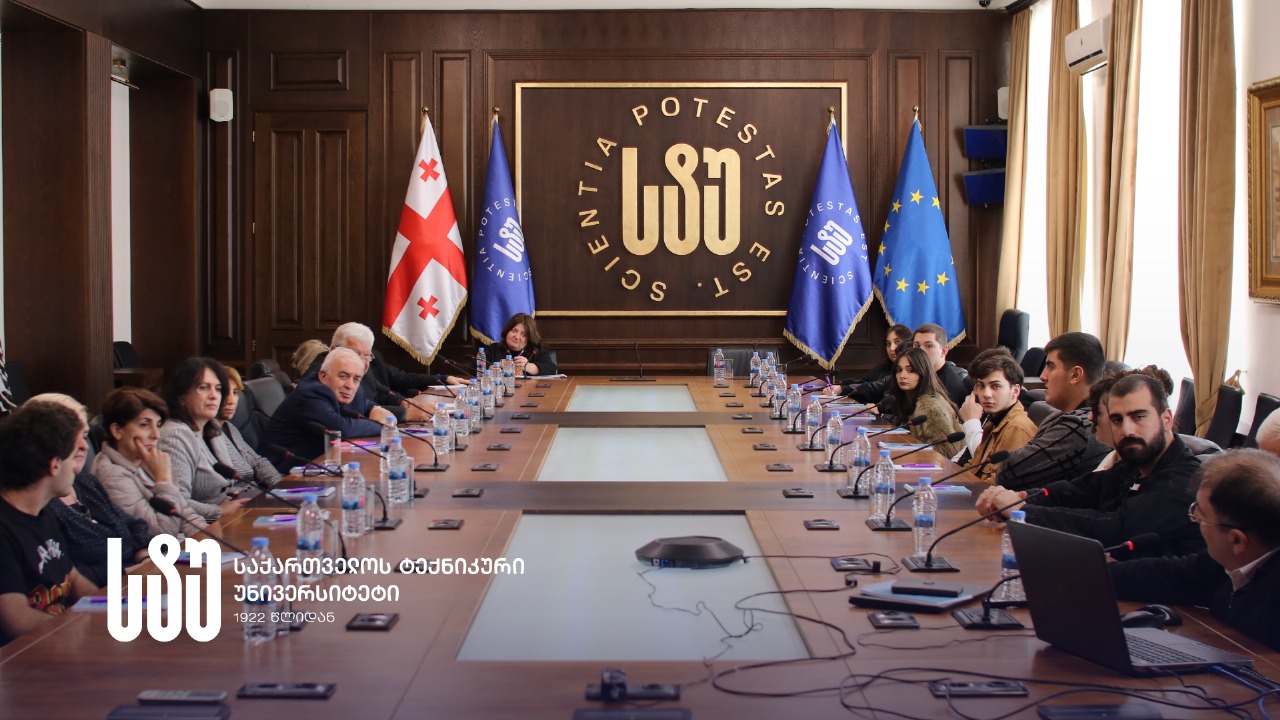
A series of scientific conferences dedicated to the Day of the Abkhazian Language - “Georgian State Languages in the Era of Artificial Intelligence and Digital Economy - Cultural and Technological Aspects” - has opened at the Georgian Technical University, organized by the Scientific Research Institute for Cultural Preservation and Technological Development of the State Languages of Georgia.
The scientific event was opened by the Vice-Rector of the Georgian Technical University. Professor Tamar Tsereteli congratulated the gathered public on the Day of the Abkhazian Language: scientists-researchers, the head of the Department of Science and Innovations of the Georgian Technical University, Professor Mikheil Janikashvili, professors-teachers of the Faculty of Informatics and Management Systems, the professor of the Department of Artificial Intelligence of the Georgian Technical University, the director of the Research Institute for Cultural Preservation and Technological Development of State Languages of Georgia - Konstantine Pkhakadze, the employees and students of the institute.
According to the Vice-Rector, the scientific study of the Abkhazian language is one of the priorities for researchers of the Georgian Technical University.
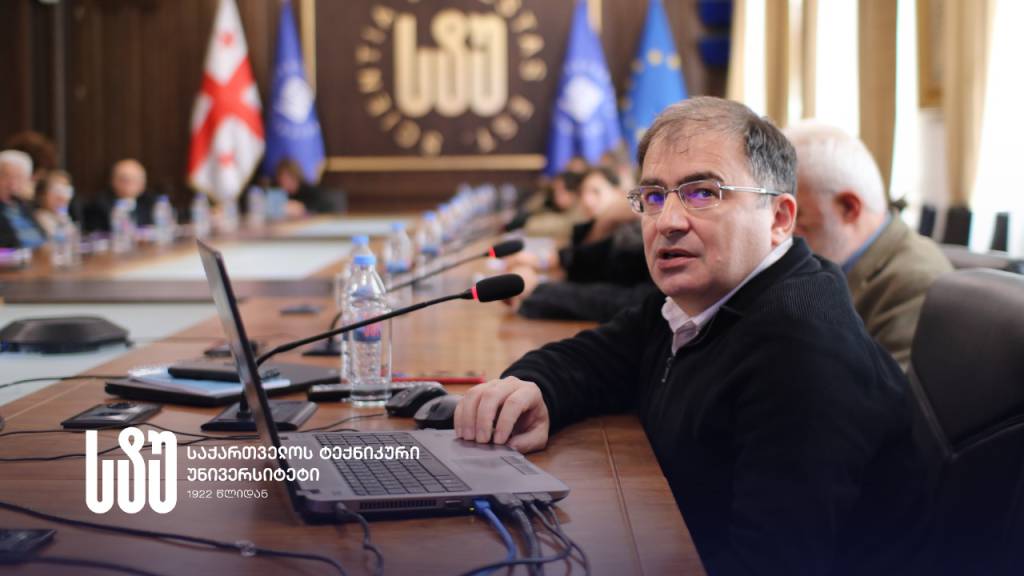
“With the support of the rector, academician David Gurgenidze, a series of conferences has been opened at the Georgian Technical University, where researchers will discuss the current issues of protecting the Abkhazian language from the threats of digital extinction and its development. Taking into account the fact that temporarily occupied Abkhazia is a great pain for Georgia, and the Abkhazian language, which, along with Georgian, is the state language on the territory of Abkhazia and is an integral part of the history and culture of Georgia, its protection, preservation, and study is one of the priorities for scientists. Language is a multifaceted and constantly evolving phenomenon, which serves not only as the basis for communication, but also for the development of the state, its economic and cultural sustainability. Accordingly, the digitization of the Georgian and Abkhazian languages, along with their technological development, is our common national task. What the Georgian state is doing to protect the Abkhazian ethnos, language, and culture is extremely important. The Georgian Technical University successfully operates the Research Institute for Cultural Preservation and Technological Development of State Languages. Our university and scientific circles are deeply aware of the historical responsibility and are involved in the process of protecting and preserving state languages, in order to ensure the place of natural languages in digital and artificial intelligence systems through academic knowledge, scientific research and innovation; with the aim that the Georgian and Abkhazian languages do not remain just a legacy of the past, but become part of the digital culture of the future. I wish the conference participants every success,” said Tamar Tsereteli.
As the organizer of the conference, Professor of the Department of Artificial Intelligence at the Georgian Technical University, Director of the Research Institute for Cultural Preservation and Technological Development of State Languages of Georgia, Member of the State Language Expert Commission, Member of the Council of Scientists of the Ministry of Education, Science and Youth of Georgia Konstantine Pkhakadze noted, the cycle of scientific conferences provides an opportunity for interested parties, including government structures, to follow the results of the research processes underway in the country from year to year in order to fully technologically support the Georgian and Abkhazian languages.
According to Kote Pkhakadze, the second large-scale scientific conference of this name will be held on April 14th next year, dedicated to the Day of the Georgian Language.
The following scientists and researchers presented their reports at the scientific conference: Rati Skhirtladze from Caucasus University - on the topic: “Enagram - a platform for language technologies”; Lasha Abzianidze - Assistant Professor in Computational Linguistics at the Department of Language, Literature and Communication of Utrecht University (Kingdom of the Netherlands), Head of the GTU Laboratory of Georgian and Abkhazian Language Resources and Technologies of the Research Institute for Cultural Preservation and Technological Development of State Languages of Georgia, on the topic: “Logic and Derivation in Natural Language Processing”; Archil Elizbarishvili - Head of the Technical Support Department of the Department of Information Technologies of TSU, Coordinator of the French-Georgian Program in Computer Sciences - on the topic: “Lemmatization of Georgian Verbs Using Linked Data, Machine Learning and Crowdsourcing”; Alexander Maskharashvili - Assistant Professor in Computational Linguistics at the Department of Linguistics at the University of Illinois (USA), Chief Research Fellow at the GTU Department of Logic, Language and Artificial Intelligence at the Research Institute for Cultural Preservation and Technological Development of the State Languages of Georgia, on the topic: “Syntax of the Georgian Language: Challenges for Chomskyan X-bar Phrasal Approaches”; David Kurtskhalia and Luka Pkhakadze - Programmers of the GTU Laboratory of Georgian and Abkhazian Language Resources and Technologies at the Research Institute for Cultural Preservation and Technological Development of the State Languages of Georgia, on the topic: “A Review of a Number of Georgian and Abkhazian Language Resources and Technologies Developed Based on the Logical Grammar of the Georgian Language and Intellectual Corpora for the Self-Development of the Georgian and Abkhazian Languages”; Konstantine Pkhakadze - Director of the Research Institute for Cultural Preservation and Technological Development of the State Languages of Georgia at the Georgian State University, on the topic: “Once again, about the basic results of the Research Institute for Cultural Preservation and Technological Development of the State Languages of Georgia, its planned goals and the threats facing the Georgian and Abkhazian languages in the coming era of artificial intelligence and the digital economy.”
After the speakers’ speeches, an open discussion was held, in which, along with scientists and researchers, students were also involved.
The scientific event was opened by the Vice-Rector of the Georgian Technical University. Professor Tamar Tsereteli congratulated the gathered public on the Day of the Abkhazian Language: scientists-researchers, the head of the Department of Science and Innovations of the Georgian Technical University, Professor Mikheil Janikashvili, professors-teachers of the Faculty of Informatics and Management Systems, the professor of the Department of Artificial Intelligence of the Georgian Technical University, the director of the Research Institute for Cultural Preservation and Technological Development of State Languages of Georgia - Konstantine Pkhakadze, the employees and students of the institute.
According to the Vice-Rector, the scientific study of the Abkhazian language is one of the priorities for researchers of the Georgian Technical University.
“With the support of the rector, academician David Gurgenidze, a series of conferences has been opened at the Georgian Technical University, where researchers will discuss the current issues of protecting the Abkhazian language from the threats of digital extinction and its development. Taking into account the fact that temporarily occupied Abkhazia is a great pain for Georgia, and the Abkhazian language, which, along with Georgian, is the state language on the territory of Abkhazia and is an integral part of the history and culture of Georgia, its protection, preservation, and study is one of the priorities for scientists. Language is a multifaceted and constantly evolving phenomenon, which serves not only as the basis for communication, but also for the development of the state, its economic and cultural sustainability. Accordingly, the digitization of the Georgian and Abkhazian languages, along with their technological development, is our common national task. What the Georgian state is doing to protect the Abkhazian ethnos, language, and culture is extremely important. The Georgian Technical University successfully operates the Research Institute for Cultural Preservation and Technological Development of State Languages. Our university and scientific circles are deeply aware of the historical responsibility and are involved in the process of protecting and preserving state languages, in order to ensure the place of natural languages in digital and artificial intelligence systems through academic knowledge, scientific research and innovation; with the aim that the Georgian and Abkhazian languages do not remain just a legacy of the past, but become part of the digital culture of the future. I wish the conference participants every success,” said Tamar Tsereteli.
As the organizer of the conference, Professor of the Department of Artificial Intelligence at the Georgian Technical University, Director of the Research Institute for Cultural Preservation and Technological Development of State Languages of Georgia, Member of the State Language Expert Commission, Member of the Council of Scientists of the Ministry of Education, Science and Youth of Georgia Konstantine Pkhakadze noted, the cycle of scientific conferences provides an opportunity for interested parties, including government structures, to follow the results of the research processes underway in the country from year to year in order to fully technologically support the Georgian and Abkhazian languages.
According to Kote Pkhakadze, the second large-scale scientific conference of this name will be held on April 14th next year, dedicated to the Day of the Georgian Language.
The following scientists and researchers presented their reports at the scientific conference: Rati Skhirtladze from Caucasus University - on the topic: “Enagram - a platform for language technologies”; Lasha Abzianidze - Assistant Professor in Computational Linguistics at the Department of Language, Literature and Communication of Utrecht University (Kingdom of the Netherlands), Head of the GTU Laboratory of Georgian and Abkhazian Language Resources and Technologies of the Research Institute for Cultural Preservation and Technological Development of State Languages of Georgia, on the topic: “Logic and Derivation in Natural Language Processing”; Archil Elizbarishvili - Head of the Technical Support Department of the Department of Information Technologies of TSU, Coordinator of the French-Georgian Program in Computer Sciences - on the topic: “Lemmatization of Georgian Verbs Using Linked Data, Machine Learning and Crowdsourcing”; Alexander Maskharashvili - Assistant Professor in Computational Linguistics at the Department of Linguistics at the University of Illinois (USA), Chief Research Fellow at the GTU Department of Logic, Language and Artificial Intelligence at the Research Institute for Cultural Preservation and Technological Development of the State Languages of Georgia, on the topic: “Syntax of the Georgian Language: Challenges for Chomskyan X-bar Phrasal Approaches”; David Kurtskhalia and Luka Pkhakadze - Programmers of the GTU Laboratory of Georgian and Abkhazian Language Resources and Technologies at the Research Institute for Cultural Preservation and Technological Development of the State Languages of Georgia, on the topic: “A Review of a Number of Georgian and Abkhazian Language Resources and Technologies Developed Based on the Logical Grammar of the Georgian Language and Intellectual Corpora for the Self-Development of the Georgian and Abkhazian Languages”; Konstantine Pkhakadze - Director of the Research Institute for Cultural Preservation and Technological Development of the State Languages of Georgia at the Georgian State University, on the topic: “Once again, about the basic results of the Research Institute for Cultural Preservation and Technological Development of the State Languages of Georgia, its planned goals and the threats facing the Georgian and Abkhazian languages in the coming era of artificial intelligence and the digital economy.”
After the speakers’ speeches, an open discussion was held, in which, along with scientists and researchers, students were also involved.