European Day of Languages Celebrated at GTU
26-09-2025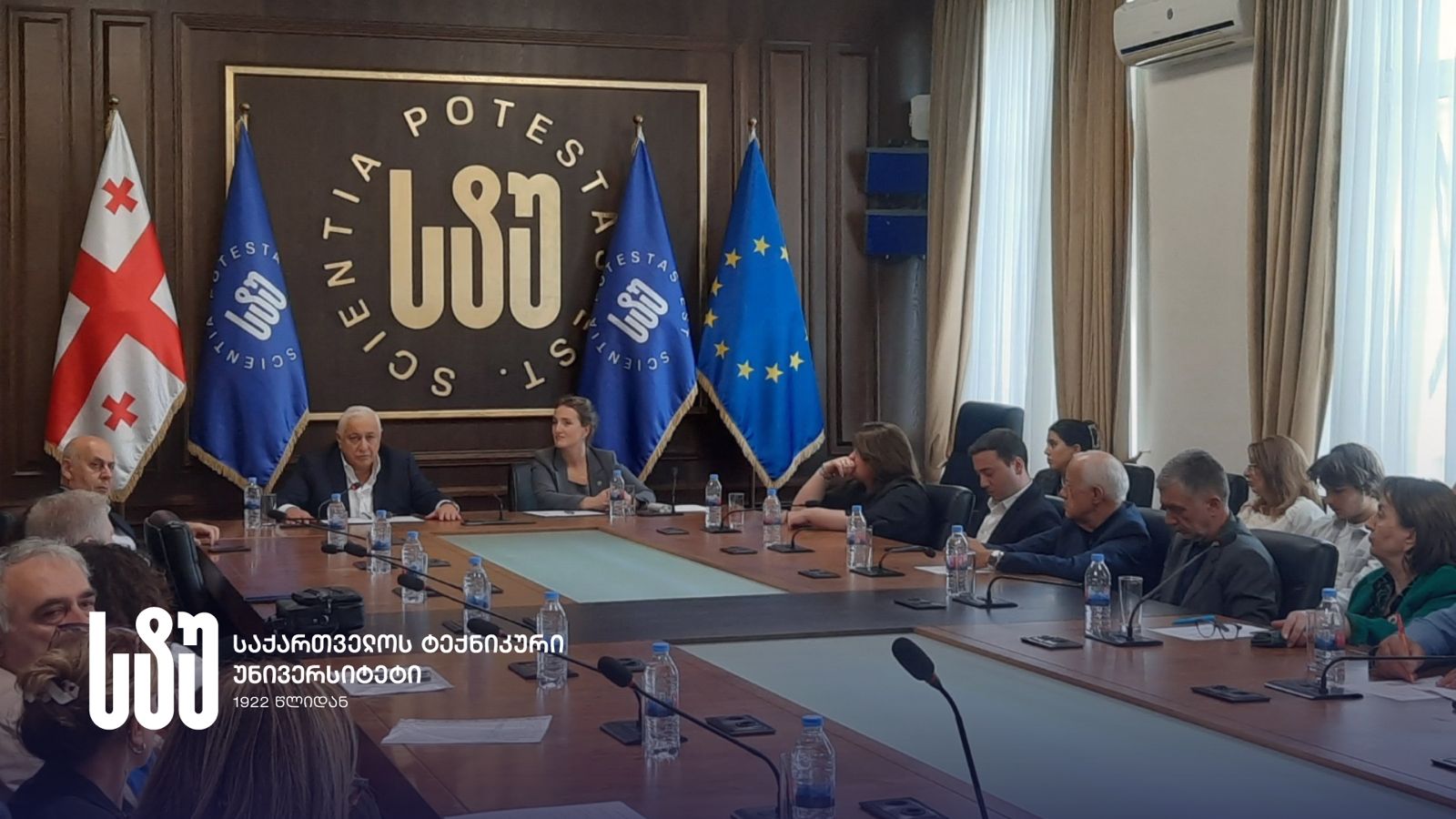
At the Georgian Technical University, the European Day of Languages was celebrated with a scientific event and with the international message “Languages Open Hearts and Minds”.
The event dedicated to the European Day of Languages opened the Rector of the Georgian Technical University, Academician David Gurgenidze. It was also opened by Mariam Lashkhi, the Chairperson of the Committee on Education, Science and Youth Affairs of the Parliament of Georgia.
The event took place in the Niko Nikoladze Hall of the university. Among those present were Zurab Gudavadze, President of the GTU Supervisory Board, Vice-Rector Tamar Tsereteli, and Professor Konstantine Pkhakadze, Director of the Scientific Research Center for Cultural Preservation and Technological Development of State Languages of Georgia at GTU. Deans of faculties, scientific and academic circles, young researchers, and doctoral students were also participants.
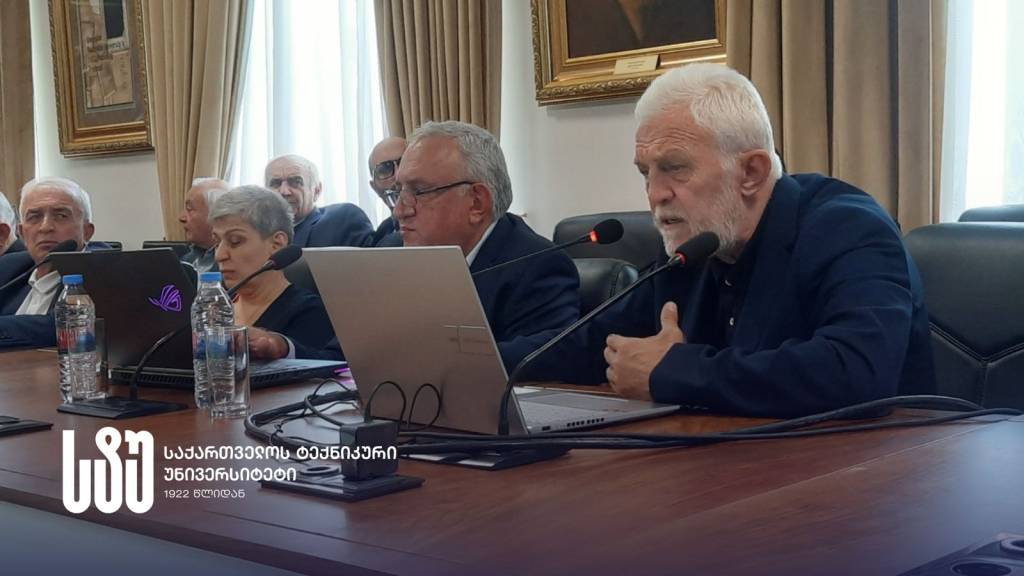
According to the statement by Rector Academician David Gurgenidze, this year the Council of Europe is celebrating the European Day of Languages with a particularly important call for all countries, including Georgia. The call is: “Languages open hearts and minds”. As the Rector noted, by the end of the first quarter of this century, many countries of the world will be facing a major challenge. This challenge involves protecting their state languages from the threat of digital extinction. Researchers are uniting to overcome this challenge.
“Today, many countries and nations of the world are facing the challenge of the state language. This challenge is global and extremely important for our country as well. Two state languages operate in Georgia - Georgian and Abkhazian. In the era of artificial intelligence, languages that do not have technological alphabets are doomed to digital death, which creates threats that a number of languages with ancient cultures will lose the status of culture carriers and producers. It should be noted that in September of this year, two important international conferences were held at the Georgian Technical University regarding artificial intelligence. The first was a three-day scientific forum – “South Caucasus Conference on Artificial Intelligence” (SCCAI2025) within the framework of the “Horizon Europe” project GAIN. The coordinator of this project and the organizer of the conference is the Niko Muskhelishvili Research Institute for Computational Mathematics of our university, in partnership with the German Center for Artificial Intelligence Research (DFKI) and the French National Institute for Digital Science and Technology Research (INRIA). The second was the 55th International Conference of the prestigious international organization “Young Engineers of Europe” (EYE) - “Artificial Intelligence and Sustainable Development”, which was held for the first time in Georgia. Both international scientific forums presented topics such as the possibilities of processing natural languages, including South Caucasian languages, by providing AI, discussed the threats of digital language death, the possibilities of overcoming it and integrating it into the global AI community, and, what is so important, discussed the need to establish a common scientific research platform.
I would like to take this opportunity to thank the Government of Georgia and the Prime Minister - Irakli Kobakhidze, the Parliament of Georgia, the Ministry of Education, Science and Youth and personally the Minister - Givi Mikanadze, with whose active support and efforts the Scientific Research Institute for Cultural Preservation and Technological Development of State Languages of Georgia was established at the Georgian Technical University, which is already working in the direction of the protection and development of state languages. It is noteworthy that the academic and scientific circles of our university, young researchers, and doctoral students are involved in the research. The Institute and its head, Professor Konstantine Pkhakadze, together with Georgian and foreign colleagues, are conducting serious work in the direction of avoiding the threats of digital extinction of the Georgian and Abkhazian languages,” said David Gurgenidze.
The participants of the event were welcomed by the Chairperson of the Committee on Education, Science, and Youth Affairs of the Parliament of Georgia.
Mariam Lashkhi spoke about the need to protect the Georgian and Abkhazian languages from digital threats and integrate the state languages of Georgia into the international space of digital technologies, and also focused on the support of the Parliament of Georgia in the direction of the development of state languages. According to her, the aforementioned issues are planned to be heard in the near future in the Parliament’s Committee on Education, Science and Youth Affairs.
Director of the Scientific Research Institute for Cultural Preservation and Technological Development of State Languages of Georgia, member of the State Language Expert Commission, Professor Konstantine Pkhakadze, introduced the Institute’s goals and objectives to the audience. According to him, the institute was founded on the basis of the Educational and Scientific Center for Cultural Preservation and Technological Development of the State Languages of Georgia at the Georgian Technical University and continues to work on two long-term projects: “Technological Alphabet of the Georgian Language” and “Plan-Program for Full Technological Support of the Abkhazian Language”.
At the event, Aleksandre Rusetski, a doctoral student at the Georgian Technical University, discussed the prospects for the development of the Georgian school of metacognitive linguistics, while a young researcher, doctoral student Rafael Kalandadze, presented his research - “Large Language Models for Languages with Limited Resources”. After the reports, the event continued in an interactive format.
The event dedicated to the European Day of Languages opened the Rector of the Georgian Technical University, Academician David Gurgenidze. It was also opened by Mariam Lashkhi, the Chairperson of the Committee on Education, Science and Youth Affairs of the Parliament of Georgia.
The event took place in the Niko Nikoladze Hall of the university. Among those present were Zurab Gudavadze, President of the GTU Supervisory Board, Vice-Rector Tamar Tsereteli, and Professor Konstantine Pkhakadze, Director of the Scientific Research Center for Cultural Preservation and Technological Development of State Languages of Georgia at GTU. Deans of faculties, scientific and academic circles, young researchers, and doctoral students were also participants.
According to the statement by Rector Academician David Gurgenidze, this year the Council of Europe is celebrating the European Day of Languages with a particularly important call for all countries, including Georgia. The call is: “Languages open hearts and minds”. As the Rector noted, by the end of the first quarter of this century, many countries of the world will be facing a major challenge. This challenge involves protecting their state languages from the threat of digital extinction. Researchers are uniting to overcome this challenge.
“Today, many countries and nations of the world are facing the challenge of the state language. This challenge is global and extremely important for our country as well. Two state languages operate in Georgia - Georgian and Abkhazian. In the era of artificial intelligence, languages that do not have technological alphabets are doomed to digital death, which creates threats that a number of languages with ancient cultures will lose the status of culture carriers and producers. It should be noted that in September of this year, two important international conferences were held at the Georgian Technical University regarding artificial intelligence. The first was a three-day scientific forum – “South Caucasus Conference on Artificial Intelligence” (SCCAI2025) within the framework of the “Horizon Europe” project GAIN. The coordinator of this project and the organizer of the conference is the Niko Muskhelishvili Research Institute for Computational Mathematics of our university, in partnership with the German Center for Artificial Intelligence Research (DFKI) and the French National Institute for Digital Science and Technology Research (INRIA). The second was the 55th International Conference of the prestigious international organization “Young Engineers of Europe” (EYE) - “Artificial Intelligence and Sustainable Development”, which was held for the first time in Georgia. Both international scientific forums presented topics such as the possibilities of processing natural languages, including South Caucasian languages, by providing AI, discussed the threats of digital language death, the possibilities of overcoming it and integrating it into the global AI community, and, what is so important, discussed the need to establish a common scientific research platform.
I would like to take this opportunity to thank the Government of Georgia and the Prime Minister - Irakli Kobakhidze, the Parliament of Georgia, the Ministry of Education, Science and Youth and personally the Minister - Givi Mikanadze, with whose active support and efforts the Scientific Research Institute for Cultural Preservation and Technological Development of State Languages of Georgia was established at the Georgian Technical University, which is already working in the direction of the protection and development of state languages. It is noteworthy that the academic and scientific circles of our university, young researchers, and doctoral students are involved in the research. The Institute and its head, Professor Konstantine Pkhakadze, together with Georgian and foreign colleagues, are conducting serious work in the direction of avoiding the threats of digital extinction of the Georgian and Abkhazian languages,” said David Gurgenidze.
The participants of the event were welcomed by the Chairperson of the Committee on Education, Science, and Youth Affairs of the Parliament of Georgia.
Mariam Lashkhi spoke about the need to protect the Georgian and Abkhazian languages from digital threats and integrate the state languages of Georgia into the international space of digital technologies, and also focused on the support of the Parliament of Georgia in the direction of the development of state languages. According to her, the aforementioned issues are planned to be heard in the near future in the Parliament’s Committee on Education, Science and Youth Affairs.
Director of the Scientific Research Institute for Cultural Preservation and Technological Development of State Languages of Georgia, member of the State Language Expert Commission, Professor Konstantine Pkhakadze, introduced the Institute’s goals and objectives to the audience. According to him, the institute was founded on the basis of the Educational and Scientific Center for Cultural Preservation and Technological Development of the State Languages of Georgia at the Georgian Technical University and continues to work on two long-term projects: “Technological Alphabet of the Georgian Language” and “Plan-Program for Full Technological Support of the Abkhazian Language”.
At the event, Aleksandre Rusetski, a doctoral student at the Georgian Technical University, discussed the prospects for the development of the Georgian school of metacognitive linguistics, while a young researcher, doctoral student Rafael Kalandadze, presented his research - “Large Language Models for Languages with Limited Resources”. After the reports, the event continued in an interactive format.