A Group of GTU Scientists and Researchers Is Conducting a Complex Study for the Sustainable Development of Chiatura Ecosystems
05-09-2025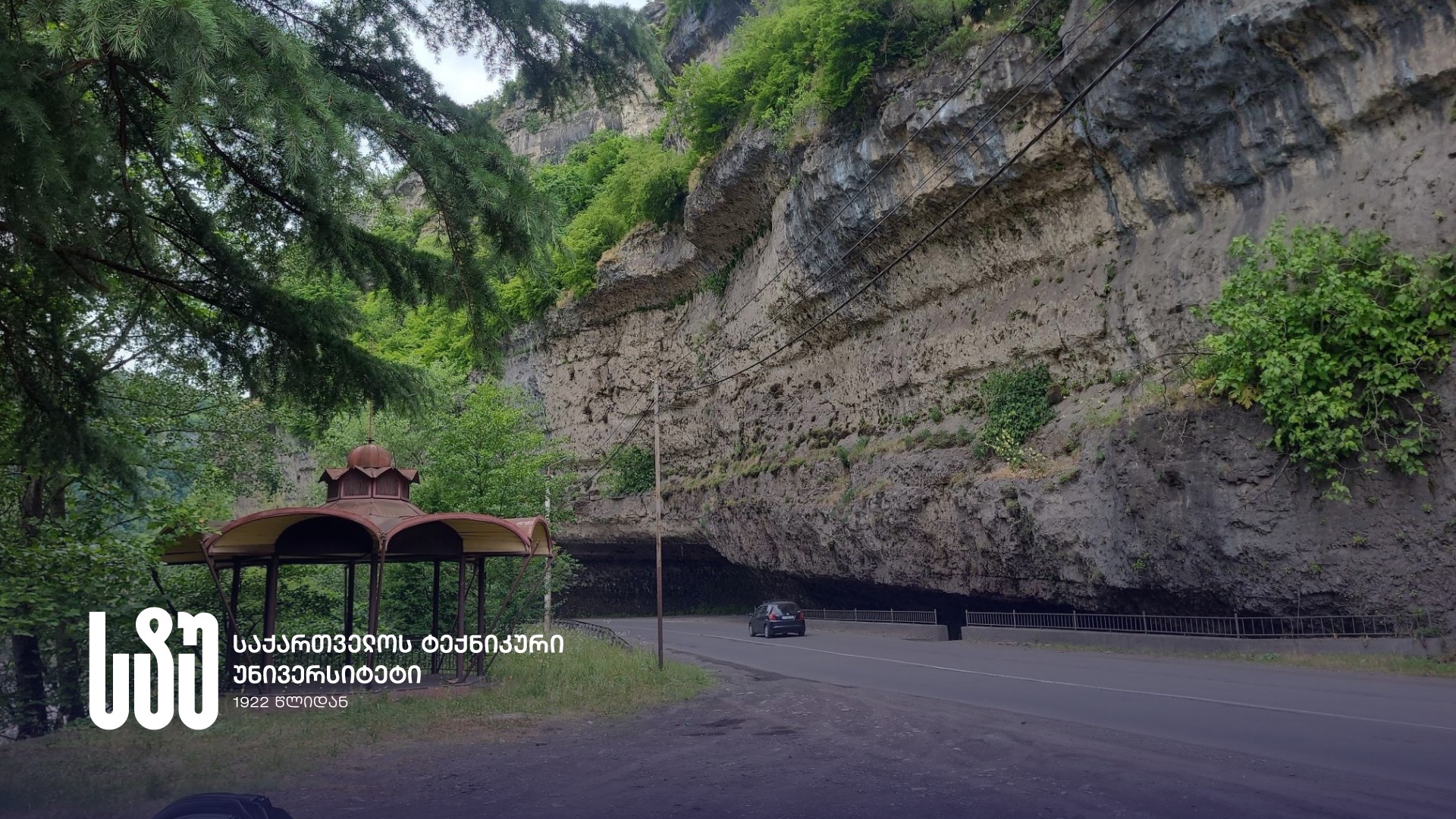
“For the first time, a complex scientific study is being conducted in Chiatura municipality to assess the risks of manganese contamination of ecosystems and food products. Our objectives include evaluating the risks from both natural and human-caused geological and hydrological activities, identifying dangerous geological processes, and developing a methodology for predicting soil erosion using digital models. We also aim to design innovative engineering measures to prevent erosion and, crucially, to compile a hazard zoning map at the appropriate scale to guide local actions,” says Gulchina Kuchava, a scientist at the Hydrometeorological Institute of the Georgian Technical University.
A group of GTU scientists and researchers is conducting a comprehensive study of the Chiatura municipality within the framework of the grant project - “Minimizing the risks of manganese pollution of ecosystems and food products of Chiatura municipality and natural disasters in order to reduce soil degradation”.
Scientists Gulchina Kuchava (project leader), Lali Shavliashvili (coordinator), researchers Givi Gavardashvili and Giorgi Kordzakhia, and young scientists Ekaterina Shubladze and Zurab Rikadze will develop recommendations for identifying current ecological problems in the municipality and evaluating their impacts on both ecosystems and food products. Additionally, the project aims specifically to determine effective methods for reducing soil degradation and to provide actionable guidance based on its findings.
According to Lali Shavliashvili, a scientist at the Hydrometeorological Institute of the Georgian Technical University, the research is topical, innovative, and prioritized. The manganese pollution hotspots in the region will be thoroughly studied. Their impact on ecosystems and food products will be determined.

Recommendations on the levels of natural hazards and anti-erosion measures to minimize soil degradation will be developed and issued, an inventory of dangerous geological processes will be made, and expected hazards and related risks will be determined.
“Chiatura Municipality is distinguished by its unique natural environment. However, intensive manganese mining has created serious ecological problems. The goal of our research is to scientifically analyze these challenges and develop recommendations that will be practically applicable to both local self-government and the population involved in agriculture. It is important that the results obtained will not only reduce soil degradation, but also restore the purity of ecosystems and prevent natural disasters in the future,” says Lali Shavliashvili.
According to Mikheil Janikashvili, Head of the GTU Department of Science and Innovation, the results of the project will not be limited to research purposes only, but they will also be possible to use at a practical level, and the recommendations received will significantly contribute to improving the state of the local environment and strengthening the sustainability of ecosystems.
“One of the main missions of the GTU is to respond to the problems of strategically important regions of the country and carry out innovative scientific research. On the Chiatura example we see how necessary it is to study environmental issues in depth and develop practical recommendations. This project is important not only for improving the ecological state of the Chiatura municipality, but also in terms of the country’s sustainable development strategy in general. I am proud of our scientists who respond to real challenges based on knowledge and research,” says Mikheil Janikashvili.
A group of GTU scientists and researchers is conducting a comprehensive study of the Chiatura municipality within the framework of the grant project - “Minimizing the risks of manganese pollution of ecosystems and food products of Chiatura municipality and natural disasters in order to reduce soil degradation”.
Scientists Gulchina Kuchava (project leader), Lali Shavliashvili (coordinator), researchers Givi Gavardashvili and Giorgi Kordzakhia, and young scientists Ekaterina Shubladze and Zurab Rikadze will develop recommendations for identifying current ecological problems in the municipality and evaluating their impacts on both ecosystems and food products. Additionally, the project aims specifically to determine effective methods for reducing soil degradation and to provide actionable guidance based on its findings.
According to Lali Shavliashvili, a scientist at the Hydrometeorological Institute of the Georgian Technical University, the research is topical, innovative, and prioritized. The manganese pollution hotspots in the region will be thoroughly studied. Their impact on ecosystems and food products will be determined.
Recommendations on the levels of natural hazards and anti-erosion measures to minimize soil degradation will be developed and issued, an inventory of dangerous geological processes will be made, and expected hazards and related risks will be determined.
“Chiatura Municipality is distinguished by its unique natural environment. However, intensive manganese mining has created serious ecological problems. The goal of our research is to scientifically analyze these challenges and develop recommendations that will be practically applicable to both local self-government and the population involved in agriculture. It is important that the results obtained will not only reduce soil degradation, but also restore the purity of ecosystems and prevent natural disasters in the future,” says Lali Shavliashvili.
According to Mikheil Janikashvili, Head of the GTU Department of Science and Innovation, the results of the project will not be limited to research purposes only, but they will also be possible to use at a practical level, and the recommendations received will significantly contribute to improving the state of the local environment and strengthening the sustainability of ecosystems.
“One of the main missions of the GTU is to respond to the problems of strategically important regions of the country and carry out innovative scientific research. On the Chiatura example we see how necessary it is to study environmental issues in depth and develop practical recommendations. This project is important not only for improving the ecological state of the Chiatura municipality, but also in terms of the country’s sustainable development strategy in general. I am proud of our scientists who respond to real challenges based on knowledge and research,” says Mikheil Janikashvili.