GTU Scientists Study Avalanche Hazard on Mountain Roads
25-08-2025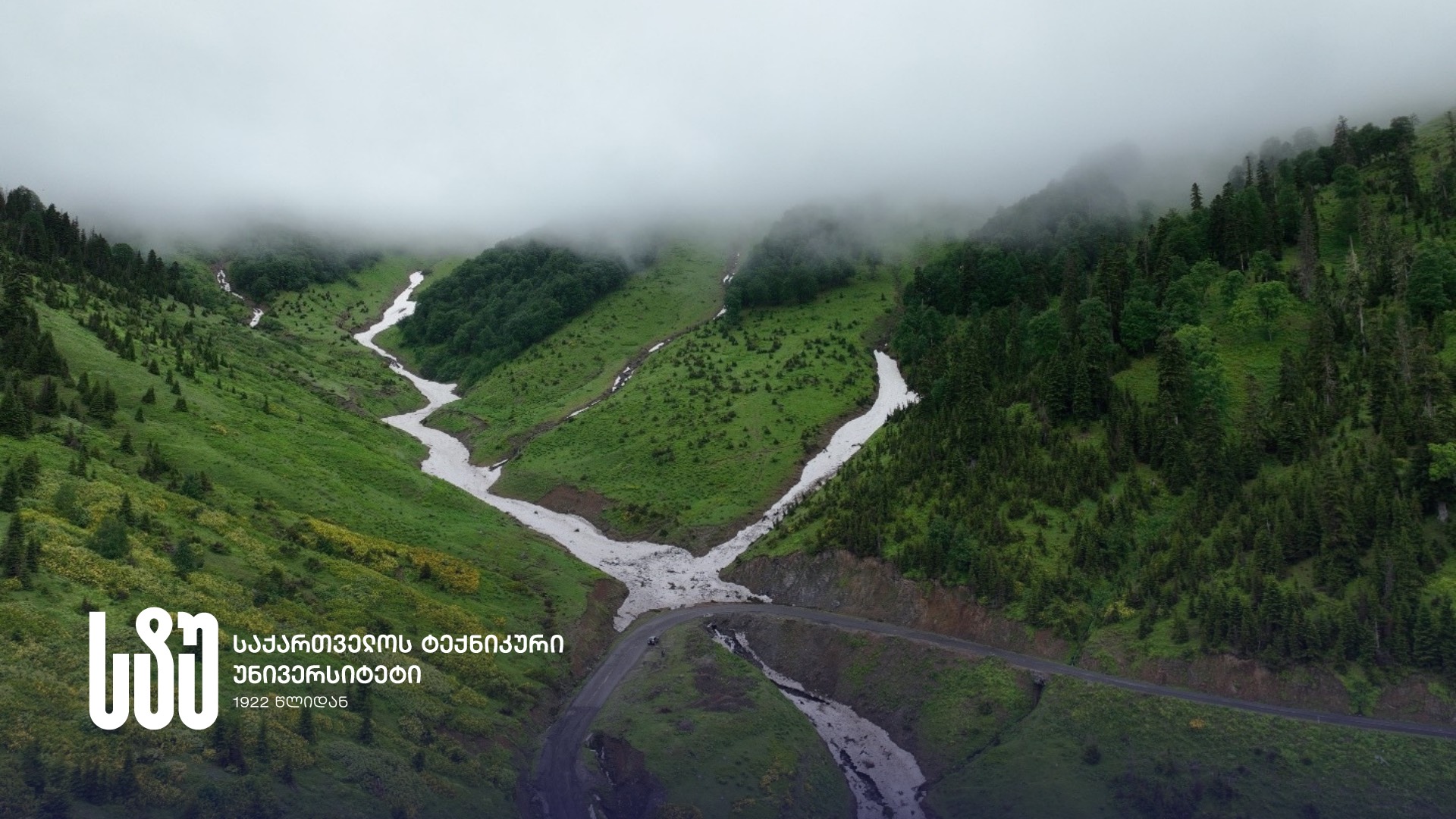
Scientists from the Georgian Technical University, led by Mikheil Pipia, Director of the Institute of Hydrometeorology and Chief Scientist of the Department of Climatology and Agrometeorology at GTU, are studying the avalanche hazard on mountain roads in Georgia within the framework of the grant project “Avalanche Hazard on Mountain Roads in Georgia and Recommendations for its Mitigation”.
As part of the research, scientists will create a database of avalanche hazards on mountain roads; develop a schematic map of avalanche hazards for each road section; and determine the main area of avalanches, their duration, and the geographical regularities of these characteristics.
The grant project – “Avalanche Hazard of Roads in Mountainous Regions of Georgia and Recommendations for Its Mitigation” involves: Nazibrola Beglarashvili, Senior Research Fellow of the Department of Monitoring and Forecasting of Natural Environment Pollution of the Institute of Hydrometeorology of the Georgian Technical University; Sophio Gorgijanidze, Head of the Department of Water Resources and Hydrological Forecasting, Chief Research Fellow; and Natela Kobakhidze, Research Fellow of the Department of Water Resources and Hydrological Forecasting.
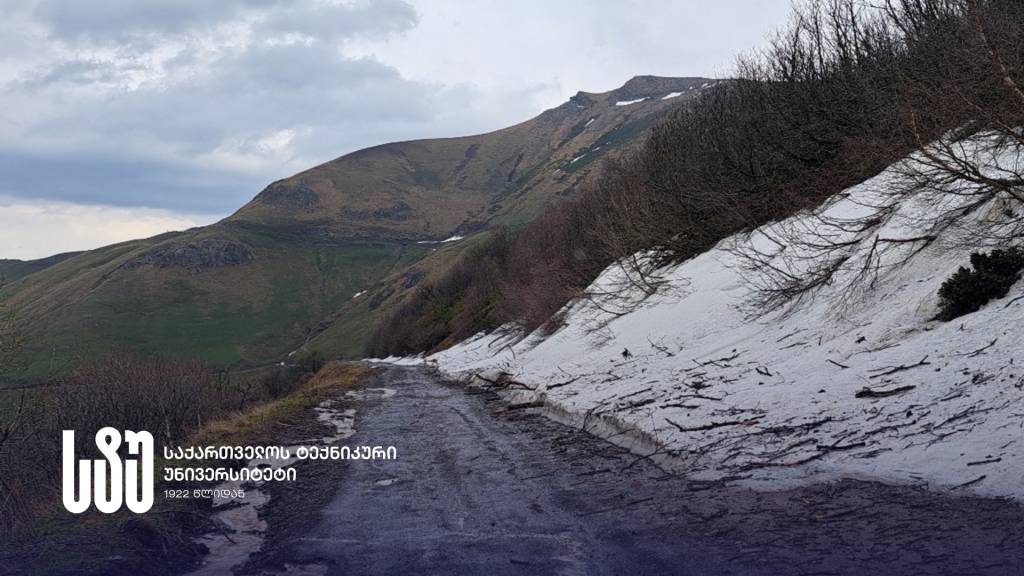
According to the project leader, Director of the Institute of Hydrometeorology of the Georgian Technical University, Chief Scientist of the Department of Climatology and Agrometeorology, Mikheil Pipia, there is no modern large-scale geoinformation map depicting the avalanche hazard of roads in mountainous regions of Georgia, which would serve as a guide when planning avalanche prevention works.
As Mikheil Pipia notes, it is necessary to create a complete database that reflects the characteristics of the avalanche hazard of roads in mountainous regions of Georgia, identifies geographical patterns of avalanche occurrence, and develops recommendations for risk reduction. The result of this complex study should aim to provide a comprehensive and modern description of the avalanche hazard on roads in mountainous regions.
“The object of the study is the roads of the mountainous regions of Georgia, namely, the Zhinvali-Larsi, Oni-Mamisoni, Batumi-Akhaltsikhe, four sections of the Svaneti road: Khaishi Chiper-Azau, Skormeti-Jorkvali, Choluri-Mestia, Khaishi-Chuberi-Sakeni; as well as the Chokhatauri-Bakhmaro, Surami-Shorapani section of the Rikoti Pass, Zekari-Abastumani, Bakuriani-Tskhratskaro, Lagodekhi-Kakhi, Pshaveli-Omalo sections of the roads, a total of 13 road sections, which have a special strategic and economic purpose and whose uninterrupted operation is important for the sustainable development of the country. In this direction, the Government of Georgia has planned and partially completed the construction of roads along with other infrastructure works. Therefore, the construction of these roads is on the agenda Risk assessment for the purpose of safe operation, including consideration of risks from natural disasters, among which a special place is occupied by the study of avalanche hazards in the sections that are the subject of our research.
The importance of mountain roads is also due to the fact that in recent years the Georgian government has been paying special attention to the development of the country’s mountainous regions, which is aimed at solving the social and economic problems of people living in mountainous regions. Among them, the promotion of mountain resorts is very important in the issue of transforming the country into a four-season resort zone. Mountain resorts and skiing are important both for establishing a healthy lifestyle and for the development of winter tourism. Most winter resorts are located in avalanche-prone zones; therefore, it is necessary to comply with the rules of movement on mountain roads and conduct rescue operations in a timely manner. In our opinion, the most important step that needs to be taken today to reduce avalanche risk is to maintain the existing forest cover on the slopes adjacent to the highway to ensure safe traffic on the highway, as well as to provide all possible support for the emergence, growth and increase in the number of new forest cover in the areas of dangerous avalanche accumulations,” says Mikheil Pipia.
At the end of the project “Avalanche Hazard of Highways in Mountainous Regions of Georgia and Recommendations for its Mitigation”, the Georgian Technical University will publish a monograph that will summarize the research results obtained during the project. Among them, one of the chapters of the monograph will be devoted to recommendations for mitigating avalanche hazards for Georgian highways.
As part of the research, scientists will create a database of avalanche hazards on mountain roads; develop a schematic map of avalanche hazards for each road section; and determine the main area of avalanches, their duration, and the geographical regularities of these characteristics.
The grant project – “Avalanche Hazard of Roads in Mountainous Regions of Georgia and Recommendations for Its Mitigation” involves: Nazibrola Beglarashvili, Senior Research Fellow of the Department of Monitoring and Forecasting of Natural Environment Pollution of the Institute of Hydrometeorology of the Georgian Technical University; Sophio Gorgijanidze, Head of the Department of Water Resources and Hydrological Forecasting, Chief Research Fellow; and Natela Kobakhidze, Research Fellow of the Department of Water Resources and Hydrological Forecasting.
According to the project leader, Director of the Institute of Hydrometeorology of the Georgian Technical University, Chief Scientist of the Department of Climatology and Agrometeorology, Mikheil Pipia, there is no modern large-scale geoinformation map depicting the avalanche hazard of roads in mountainous regions of Georgia, which would serve as a guide when planning avalanche prevention works.
As Mikheil Pipia notes, it is necessary to create a complete database that reflects the characteristics of the avalanche hazard of roads in mountainous regions of Georgia, identifies geographical patterns of avalanche occurrence, and develops recommendations for risk reduction. The result of this complex study should aim to provide a comprehensive and modern description of the avalanche hazard on roads in mountainous regions.
“The object of the study is the roads of the mountainous regions of Georgia, namely, the Zhinvali-Larsi, Oni-Mamisoni, Batumi-Akhaltsikhe, four sections of the Svaneti road: Khaishi Chiper-Azau, Skormeti-Jorkvali, Choluri-Mestia, Khaishi-Chuberi-Sakeni; as well as the Chokhatauri-Bakhmaro, Surami-Shorapani section of the Rikoti Pass, Zekari-Abastumani, Bakuriani-Tskhratskaro, Lagodekhi-Kakhi, Pshaveli-Omalo sections of the roads, a total of 13 road sections, which have a special strategic and economic purpose and whose uninterrupted operation is important for the sustainable development of the country. In this direction, the Government of Georgia has planned and partially completed the construction of roads along with other infrastructure works. Therefore, the construction of these roads is on the agenda Risk assessment for the purpose of safe operation, including consideration of risks from natural disasters, among which a special place is occupied by the study of avalanche hazards in the sections that are the subject of our research.
The importance of mountain roads is also due to the fact that in recent years the Georgian government has been paying special attention to the development of the country’s mountainous regions, which is aimed at solving the social and economic problems of people living in mountainous regions. Among them, the promotion of mountain resorts is very important in the issue of transforming the country into a four-season resort zone. Mountain resorts and skiing are important both for establishing a healthy lifestyle and for the development of winter tourism. Most winter resorts are located in avalanche-prone zones; therefore, it is necessary to comply with the rules of movement on mountain roads and conduct rescue operations in a timely manner. In our opinion, the most important step that needs to be taken today to reduce avalanche risk is to maintain the existing forest cover on the slopes adjacent to the highway to ensure safe traffic on the highway, as well as to provide all possible support for the emergence, growth and increase in the number of new forest cover in the areas of dangerous avalanche accumulations,” says Mikheil Pipia.
At the end of the project “Avalanche Hazard of Highways in Mountainous Regions of Georgia and Recommendations for its Mitigation”, the Georgian Technical University will publish a monograph that will summarize the research results obtained during the project. Among them, one of the chapters of the monograph will be devoted to recommendations for mitigating avalanche hazards for Georgian highways.