Dean of the GTU Faculty of Chemical Technology and Metallurgy - Our Mission is to Establish an Environment where Knowledge is Transformed into Innovation, and Innovation into Real Economic Value
23-07-2025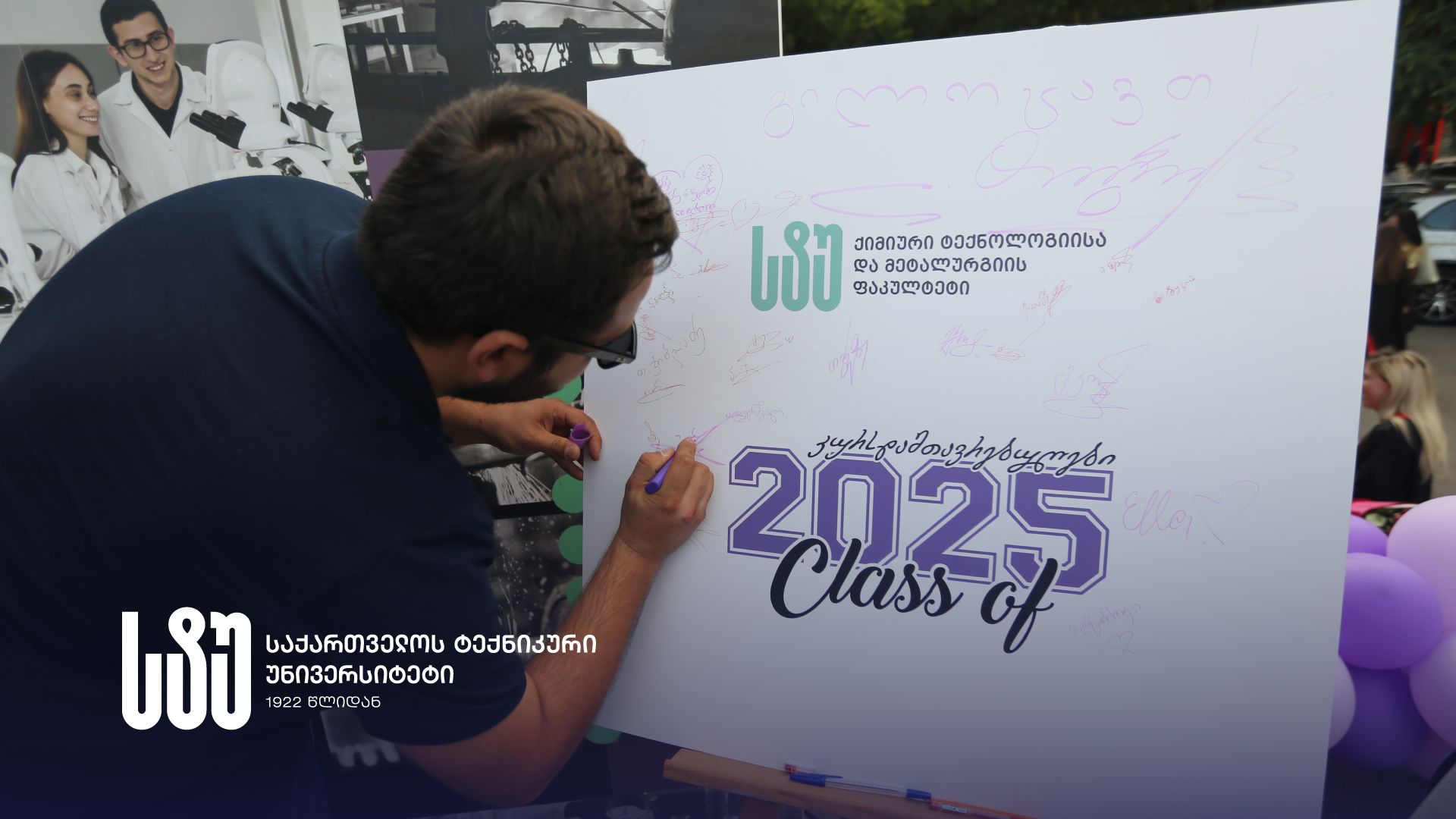
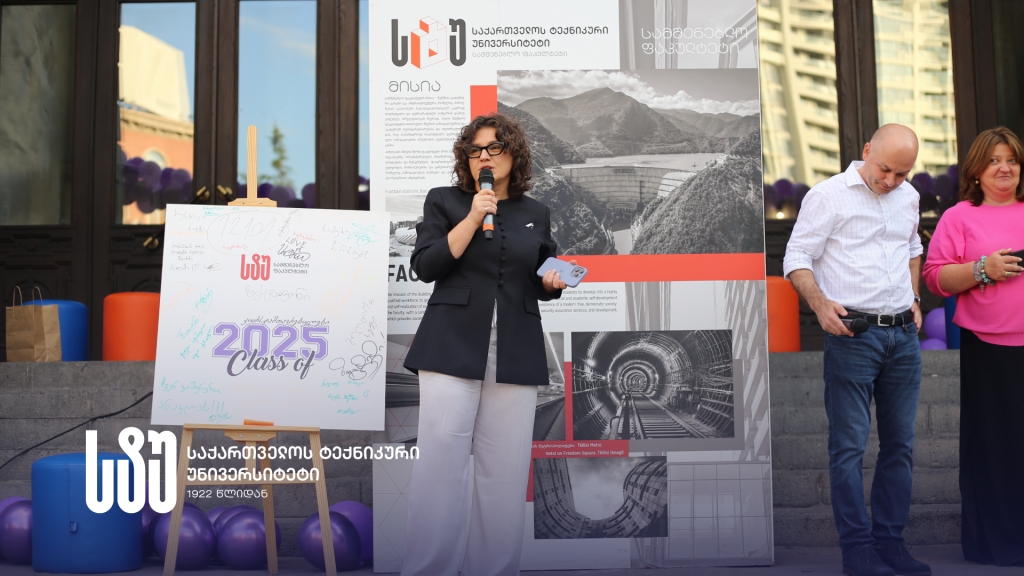
“The mission of the faculty is to establish an environment where knowledge is transformed into innovation, and innovation into real economic value. We implement multifaceted research programs, cooperate with international academic, scientific and industrial partners, and develop laboratory infrastructure so that students and young researchers receive both highly qualified theoretical knowledge and practical experience,” said Professor Liana Targamadze, Dean of the Faculty of Chemical Technology and Metallurgy of the Georgian Technical University, while summing up the 2024/2025 academic year.
According to information released by the Georgian Technical University, in the 2024/2025 academic year, 19 projects were completed or are underway with the involvement of students and professors of the Faculty of Chemical Technology and Metallurgy, including:
According to the Dean of the Faculty of Chemical Technology and Metallurgy, three out of 8 grant projects have been completed in the 2024/2025 academic year, and five are ongoing. Among them, two grant projects of the Shota Rustaveli National Science Foundation for “Applied Research” have been completed: “Method of cement production for cleaning flue gases (CO2, SOx, NOx), by passing them through a clinoptholite sorbent before emission into the atmosphere, determination of applicability through experimentation in a laboratory environment, concept approval” and “CO2 sorbents based on natural zeolites, formulation of the concept of the technological idea of synthesis/use/utilization, determination of applicability and approval through experimentation in a laboratory environment”; Also, the project of the Rustaveli Foundation grant competition “Science begins at school - research with the participation of students” – “Research on the physical and chemical characteristics of enamel and glaze preparation and application technologies on products.”
As the dean says, the following grant projects are also underway with the support of the Rustaveli Foundation:
In addition, the Dean notes that in the 2024/2025 academic year, at the initiative of the University Rector, Academician David Gurgenidze, at the faculty the laboratory of the Department of Environmental Engineering and Ecology and the Materials Science Educational and Scientific Center were renovated.
“The fields of chemical technology and metallurgy are crucial for determining a country’s technological independence. As metallurgy shifts towards low-emission and energy-efficient technologies, our goal is to establish a foundation for knowledge-based production that aligns with international standards and strengthens the nation’s economy. By integrating chemical-technological processes with engineering, we can achieve sustainable, effective, and environmentally friendly technological solutions. The Georgian Technical University serves not only as an educational institution but also as a leader in scientific research in this area. Under the leadership of Rector Academician David Gurgenidze, the faculty continues the esteemed traditions established by distinguished scientists such as Giorgi Nikoladze, Rusudan Nikoladze, Dimitri Eristavi, Nikoloz Landia, Vasil Kakabadze, Rafiel Agladze, Kalistrate Kutateladze, Givi Tsintsadze, and many others who laid the foundation for this field. I wish great success to the students, graduates, and researchers of the Faculty of Chemical Technology and Metallurgy,” says Liana Targamadze.
According to information released by the Georgian Technical University, in the 2024/2025 academic year, 19 projects were completed or are underway with the involvement of students and professors of the Faculty of Chemical Technology and Metallurgy, including:
- Technology for obtaining a functional polymer carrier based on L-lysine;
- Electrochemical synthesis of magnetite nanoparticles in an iron sulfate electrolyte solution using biocompatible stabilizers;
- Use of electrochemically synthesized nanoparticles in drug delivery and diagnostics of chronic diseases;
- Possibility of effective use of secondary material and energy resources in an apple concentrate manufacturing enterprise;
- Recovery of biogenic elements for soil recultivation of uncontrolled landfills with natural sorbents;
- Phytomigration of residual heavy metals after chemical treatment of technogenically polluted acid quarry waters;
- Recycling of edible vegetable oil waste in the enterprise;
- Development of protective preventive measures for the use of the Iori River basin as a drinking-agricultural water supply system;
- Identification of the main sources and components of atmospheric air pollution in Rustavi and development of technical measures to reduce them;
- Development of preventive measures to reduce atmospheric air pollution caused by motor transport in Tbilisi;
- Production of cardboard and cardboard products from waste paper;
- Technology for recycling plastic waste;
- Physico-chemical study of the forms of existence of minerals in sea shells and possible phase transformations;
- Synthesis and study of mixed-ligand coordination compounds of cobalt (II) and manganese (II), etc.
According to the Dean of the Faculty of Chemical Technology and Metallurgy, three out of 8 grant projects have been completed in the 2024/2025 academic year, and five are ongoing. Among them, two grant projects of the Shota Rustaveli National Science Foundation for “Applied Research” have been completed: “Method of cement production for cleaning flue gases (CO2, SOx, NOx), by passing them through a clinoptholite sorbent before emission into the atmosphere, determination of applicability through experimentation in a laboratory environment, concept approval” and “CO2 sorbents based on natural zeolites, formulation of the concept of the technological idea of synthesis/use/utilization, determination of applicability and approval through experimentation in a laboratory environment”; Also, the project of the Rustaveli Foundation grant competition “Science begins at school - research with the participation of students” – “Research on the physical and chemical characteristics of enamel and glaze preparation and application technologies on products.”
As the dean says, the following grant projects are also underway with the support of the Rustaveli Foundation:
- “Obtaining nano magnetite stabilized with biodegradable modifiers for use in the biomedical field”;
- “Study of the role of additive modifiers in the synthesis of LECA from silicate raw materials”;
- “Multifunctional nanocomposites in the B4C-TiC-SiC-BN-Al2O3-SiAlON-carbon fiber system for high-temperature and wear-resistant components of armor plates, turbine disks and blades”;
- “The combined effect of cryogenic and thermal treatment on the formation of highly functional multiphase bainitic-martensitic structures in cast irons” and “Development of a boron-containing complex ligature for multifunctional alloys based on steelmaking waste using high-temperature synthesis and metallurgical methods”.
In addition, the Dean notes that in the 2024/2025 academic year, at the initiative of the University Rector, Academician David Gurgenidze, at the faculty the laboratory of the Department of Environmental Engineering and Ecology and the Materials Science Educational and Scientific Center were renovated.
“The fields of chemical technology and metallurgy are crucial for determining a country’s technological independence. As metallurgy shifts towards low-emission and energy-efficient technologies, our goal is to establish a foundation for knowledge-based production that aligns with international standards and strengthens the nation’s economy. By integrating chemical-technological processes with engineering, we can achieve sustainable, effective, and environmentally friendly technological solutions. The Georgian Technical University serves not only as an educational institution but also as a leader in scientific research in this area. Under the leadership of Rector Academician David Gurgenidze, the faculty continues the esteemed traditions established by distinguished scientists such as Giorgi Nikoladze, Rusudan Nikoladze, Dimitri Eristavi, Nikoloz Landia, Vasil Kakabadze, Rafiel Agladze, Kalistrate Kutateladze, Givi Tsintsadze, and many others who laid the foundation for this field. I wish great success to the students, graduates, and researchers of the Faculty of Chemical Technology and Metallurgy,” says Liana Targamadze.