GTU Scientists’ Research Wins State Scientific Grant Competition
25-02-2025
A group of scientists and researchers from the Georgian Technical University has become one of the winners of the Shota Rustaveli National Science Foundation of Georgia 2024 state scientific grant competition for fundamental research.
The project -“Development of new synbiotic and probiotic beverages of grape origin, evaluation and optimization of their functional potential” is headed by the Dean of the Faculty of Agricultural Sciences and Biosystem Engineering, Academician Edisher Kvesitadze, and the project coordinator is Doctor of Agricultural Sciences Christine Museliani.
The project also involves researchers Associate Professor Ekaterine Katsitadze and Dr. Tamar Turmanidze - Georgian Technical University and the Agriculture Scientific Research Center co-participate.
According to Edisher Kvesitadze, Dean of the GTU Faculty of Agricultural Sciences and Biosystem Engineering, the research related to the project covers issues that are new in the agricultural field.
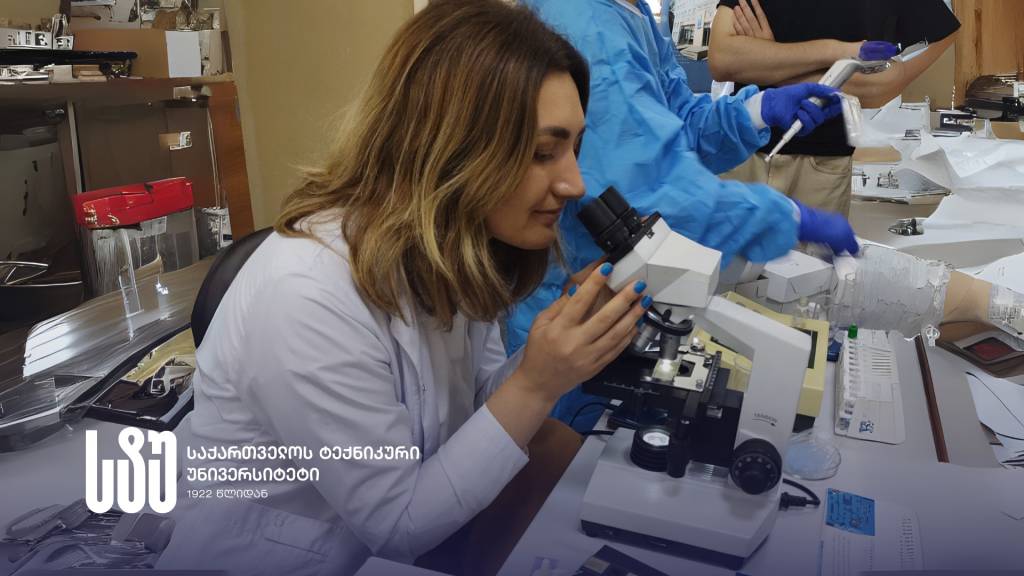
“In addition to the fact that the research is new for the agricultural sector, it also has a general focus. Namely: isolation of various types of microorganisms and obtaining their synergistic combination; fermentation of Saperavi and Rkatsiteli grape juices with isolated microorganisms; use of dry extracts of grape and sea buckthorn pomace, as well as Georgian millet powder as prebiotics; evaluation of their functional characteristics and prebiotic potential; determination of the synergistic effect of the pre and probiotic pair according to the variants; production of synbiotic grape drinks with the addition of prebiotic components; production of probiotic grape juices in combination with fruit and seed juices; use of stevioside as a sweetener in fermented drinks, if necessary, and evaluation-optimization of the functional, organoleptic properties of the resulting beverages.
The project envisages the publication of an article in an international journal, the publication of a monograph, the submission of a patent application, and participation in scientific conferences. The research aims to assess the potential of using grapes to obtain new synbiotics and probiotic drinks - to create health-relevant drinks with acceptable quality, viability of probiotics, and organoleptic indicators, without using free sugar in the technology. Georgian wine grape varieties - Saperavi and Rkatsiteli - are involved in the experiment,” the dean states.
According to the coordinator of the grant project -“Development of new synbiotic and probiotic beverages of grape origin, evaluation and optimization of their functional potential”, Doctor of Agricultural Sciences, Kristine Museliani, the implementation of the project is based on scientific research and practical solutions to issues.
“Both sides are considered in one aspect – development of innovative products, drinks, and determination of the physiological role of beverages. All this will contribute to the development of science in this direction, and the establishment of partnerships between business and research. The demand for products of this nature is gradually increasing and the prospect of business interest is also increasing.
The project is also based on the recommendations of the World Health Organization (WHO, 2003) and the requirements of the European Regulation (EC 1924/2006), according to which it is necessary to significantly limit sugar consumption, and the “European Work Programme 2020-2025 - A united effort for better health in Europe.”
The project results will have a long-term perspective - functional: in particular, the production of herbal synbiotics and probiotic drinks is practically not carried out in Georgia and is a novelty for the agricultural sector. Maintaining human health and prolonging life span is an important task of the country and is associated with using biologically essential substances. It is necessary to raise consumer awareness in this direction. The policy developed by the European Food and Nutrition Action Plan aims to create a healthy nutritional environment, for which the following political instruments are recommended: reducing sugar consumption, using non-caloric sweeteners - stevia, arnica, catemfe, monk fruit, serendipity berries, and others, reformulating recipes and creating new, naturally healthy products”, - says Christine Museliani.
The grant project -“Development of new synbiotic and probiotic beverages of grape origin, evaluation and optimization of their functional potential” is a three-year project.
The project -“Development of new synbiotic and probiotic beverages of grape origin, evaluation and optimization of their functional potential” is headed by the Dean of the Faculty of Agricultural Sciences and Biosystem Engineering, Academician Edisher Kvesitadze, and the project coordinator is Doctor of Agricultural Sciences Christine Museliani.
The project also involves researchers Associate Professor Ekaterine Katsitadze and Dr. Tamar Turmanidze - Georgian Technical University and the Agriculture Scientific Research Center co-participate.
According to Edisher Kvesitadze, Dean of the GTU Faculty of Agricultural Sciences and Biosystem Engineering, the research related to the project covers issues that are new in the agricultural field.
“In addition to the fact that the research is new for the agricultural sector, it also has a general focus. Namely: isolation of various types of microorganisms and obtaining their synergistic combination; fermentation of Saperavi and Rkatsiteli grape juices with isolated microorganisms; use of dry extracts of grape and sea buckthorn pomace, as well as Georgian millet powder as prebiotics; evaluation of their functional characteristics and prebiotic potential; determination of the synergistic effect of the pre and probiotic pair according to the variants; production of synbiotic grape drinks with the addition of prebiotic components; production of probiotic grape juices in combination with fruit and seed juices; use of stevioside as a sweetener in fermented drinks, if necessary, and evaluation-optimization of the functional, organoleptic properties of the resulting beverages.
The project envisages the publication of an article in an international journal, the publication of a monograph, the submission of a patent application, and participation in scientific conferences. The research aims to assess the potential of using grapes to obtain new synbiotics and probiotic drinks - to create health-relevant drinks with acceptable quality, viability of probiotics, and organoleptic indicators, without using free sugar in the technology. Georgian wine grape varieties - Saperavi and Rkatsiteli - are involved in the experiment,” the dean states.
According to the coordinator of the grant project -“Development of new synbiotic and probiotic beverages of grape origin, evaluation and optimization of their functional potential”, Doctor of Agricultural Sciences, Kristine Museliani, the implementation of the project is based on scientific research and practical solutions to issues.
“Both sides are considered in one aspect – development of innovative products, drinks, and determination of the physiological role of beverages. All this will contribute to the development of science in this direction, and the establishment of partnerships between business and research. The demand for products of this nature is gradually increasing and the prospect of business interest is also increasing.
The project is also based on the recommendations of the World Health Organization (WHO, 2003) and the requirements of the European Regulation (EC 1924/2006), according to which it is necessary to significantly limit sugar consumption, and the “European Work Programme 2020-2025 - A united effort for better health in Europe.”
The project results will have a long-term perspective - functional: in particular, the production of herbal synbiotics and probiotic drinks is practically not carried out in Georgia and is a novelty for the agricultural sector. Maintaining human health and prolonging life span is an important task of the country and is associated with using biologically essential substances. It is necessary to raise consumer awareness in this direction. The policy developed by the European Food and Nutrition Action Plan aims to create a healthy nutritional environment, for which the following political instruments are recommended: reducing sugar consumption, using non-caloric sweeteners - stevia, arnica, catemfe, monk fruit, serendipity berries, and others, reformulating recipes and creating new, naturally healthy products”, - says Christine Museliani.
The grant project -“Development of new synbiotic and probiotic beverages of grape origin, evaluation and optimization of their functional potential” is a three-year project.