International Scientific Forum
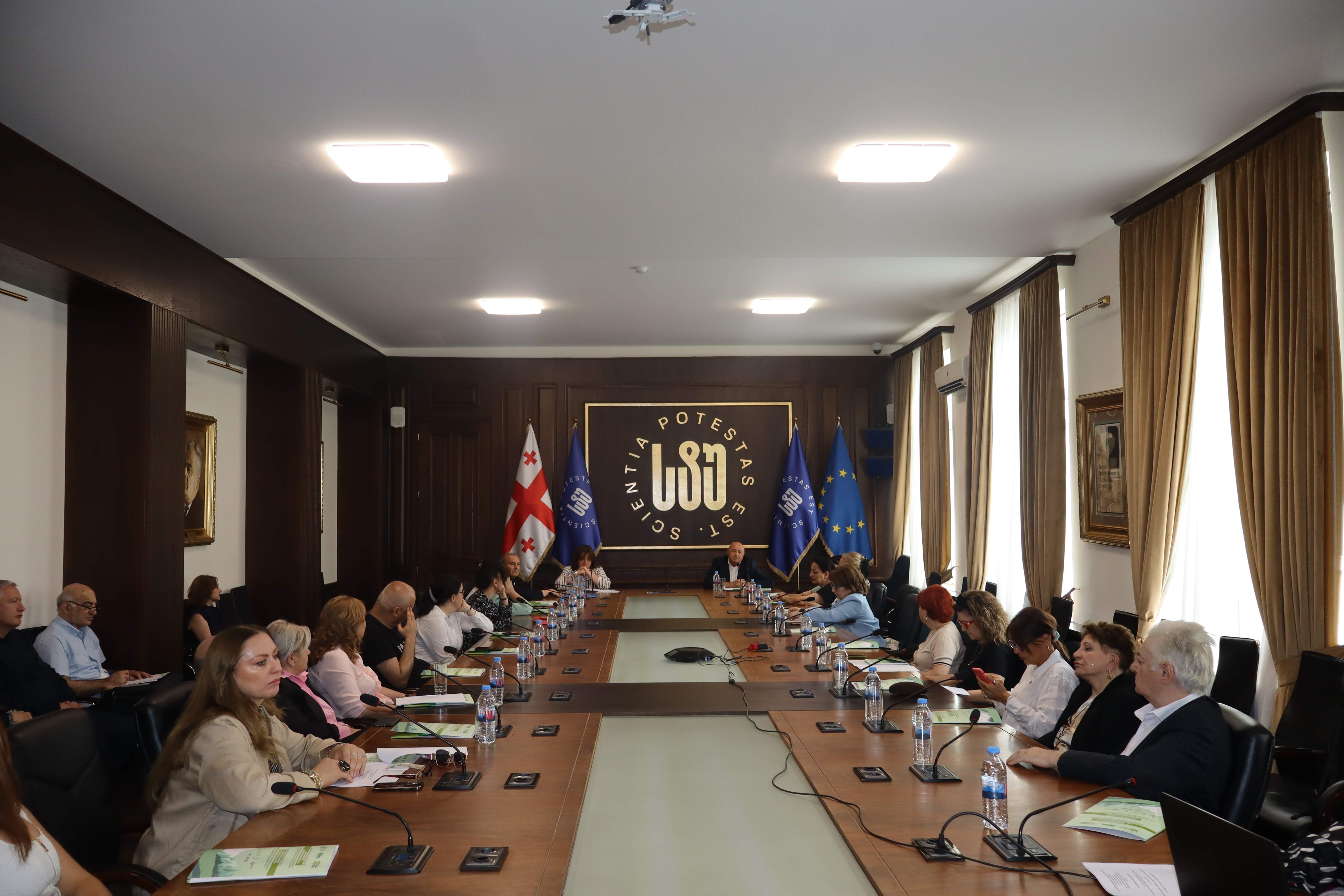
Over the course of two impactful days (30 June – 1 July, 2025), the Faculty of Sustainable Mountain Development at Georgian Technical University, in close collaboration with distinguished partners – Grigol Robakidze University, the UNIMONT HUB Research Center at the University of Milan (Italy), the Agency of Protected Areas of Georgia, the International Association of Mountain Regions of the Caucasus, the GIS Academy, and the Regional Center for Consulting and Emerging Professions – hosted a large-scale international scientific forum titled:
"Teaching Sustainable Mountain Development: Innovative Approaches to Achieving Sustainable Development Goals in Academic Space."
The event was held within the framework of project CIF-2-2024-05, funded by the Competitive Innovation Fund (CIF). The project aims to develop an English-language master's program focused on sustainable mountain development.
The forum served as a platform for knowledge exchange, interdisciplinary dialogue, and capacity building among academics, practitioners, early-career researchers, specialists, and policymakers actively engaged in mountain sustainability. Central themes included Education for Sustainable Development (ESD), innovative teaching and learning approaches, new gold-standard academic practices, and project-based learning.
The forum was officially opened by Ms. Tamar Tsereteli, Vice-Rector of Georgian Technical University. Welcoming remarks were delivered by Prof. Noe Khozrevanidze, Dean of the Faculty of Sustainable Mountain Development; Academician Givi Gvardiashvili, Director of the Mirtskhulava Institute of Water Management; Ms. Nato Sultanishvili, Head of Planning and Development at the Agency of Protected Areas; and Ms. Ana Gomelauri, Head of the CIF Administrative Unit.
A keynote presentation was delivered by Prof. Anna Giorgi, Head of UNIMONT HUB, who emphasized the strategic importance of the forum as an international platform for promoting innovative, interdisciplinary teaching practices rooted in the real-world experiences of mountain regions. She also highlighted that UNIMONT HUB implements a similar master's program and serves as the project’s key academic mentor.
During the forum sessions, researchers from Georgia and Italy discussed academic and practical approaches to supporting mountain sustainability. Topics included climate resilience, biodiversity, sustainable entrepreneurship, mountain tourism, and community empowerment. More than 30 scientific presentations were delivered.
In parallel with the forum, a specialized training – “Training Series: Design of the Syllabus and its Creation” – was conducted for Georgian university professors. Six training modules were delivered by Italian and Georgian trainers, who introduced practical tools and innovative methods for designing syllabi tailored to the specific context of mountain regions. Trainers shared best practices, teaching resources, and pedagogical strategies adaptable to diverse learning environments.
This two-day event significantly strengthened ties between international and local academic communities. These established networks and collaborations are expected to evolve into new joint initiatives that support sustainable development efforts across the Caucasus region and beyond.
The forum underscored the critical role of innovative education as a catalyst for preparing the next generation of leaders, scientists, and professionals capable of addressing the complex, holistic challenges faced by mountain regions.
All forum and training participants received bilingual certificates of participation.
We believe that through the successful organization of this forum and a number of other events, the Faculty of Sustainable Mountain Development of the Georgian Technical University, a member of the Mountain Partnership of the Food and Agriculture Organization of the United Nations (FAO), is fulfilling its mission and responsibility in promoting global efforts to ensure sustainable development of mountain areas.